The Battery Show Europe 2026: A Smaller Floor, a Sharper Purpose, and Where Sodium-Ion Fits
Our read from a first visit to The Battery Show Europe in Stuttgart, where a leaner exhibition floor revealed an industry getting honest about its costs and its capabilities. For a sodium-ion startup building on EU-sourced materials, the conversations pointed straight at the gap Europe still has to close.
NEWSEVENT
NaionX
6/26/20263 min read
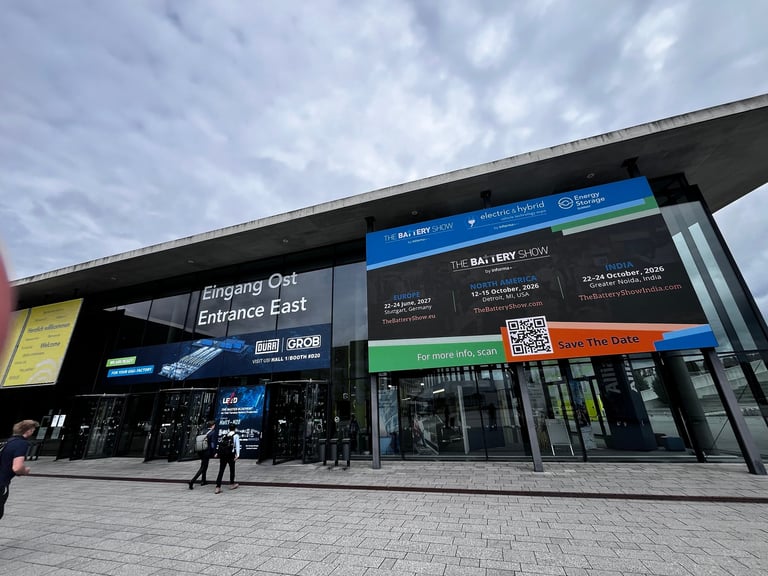
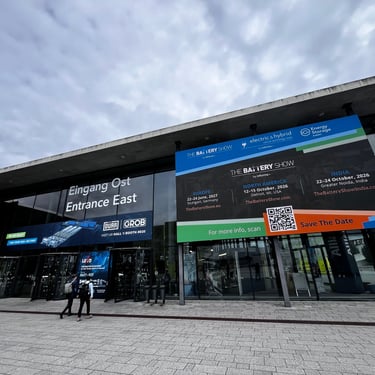
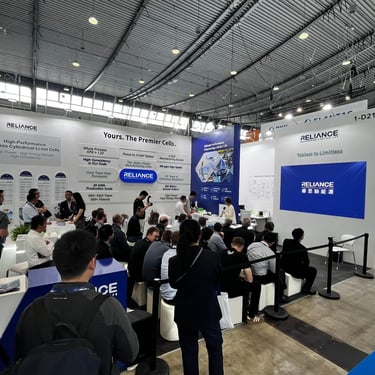
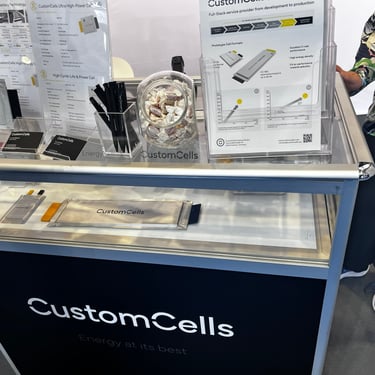
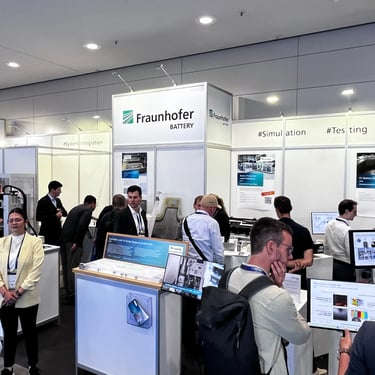
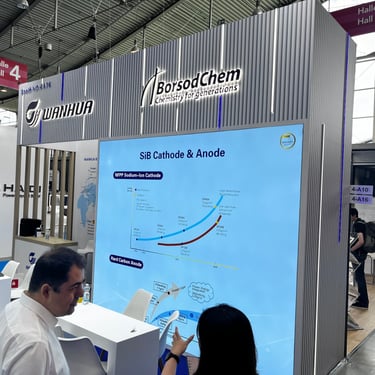
This was our first time on the floor at The Battery Show Europe in Stuttgart. Co-founder Kaspars Liepins went in without an internal benchmark from previous editions — we have no recollection of how the hall looked a year ago. But the read from people who've been coming for years was consistent: the show ran smaller this time. Worth saying up front, because it colours everything else.
A leaner floor that told an honest story
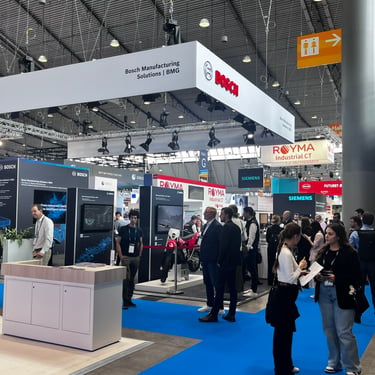
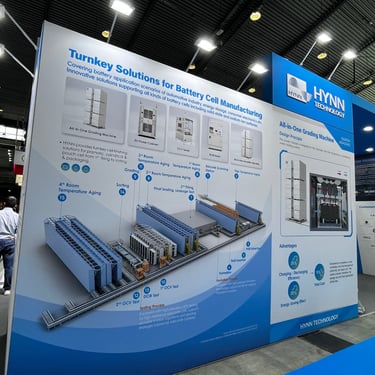
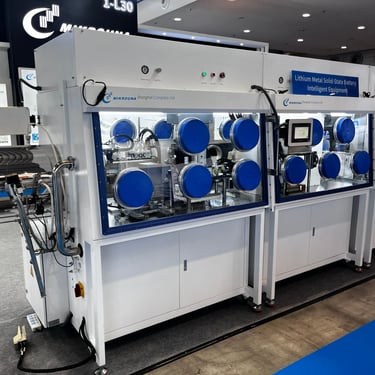
The talk on the floor was of fewer halls than last time, tighter budgets, and noticeably fewer cell makers present, with equipment and machinery suppliers carrying much of the room. That matches what a hard 2025 did to the sector — the pressure has worked its way from the balance sheets onto the exhibition floor. One caveat for accuracy: the organisers' own pre-show figures pointed to growth, not contraction, so the "smaller" verdict is the attendee read rather than a published count. Either way, the mood was unmistakable. This was not a hype crowd.
And that turned out to be the best part. The people who showed up are the ones building this industry rather than chasing a cycle. The conversations were sharper and more honest for it — less pitch, more substance.
The human layer still does the heavy lifting
Three days in Stuttgart, and the standout was meeting in person the contacts we'd only known through a screen, alongside familiar faces from across the industry. For a young company, that layer matters more than any single product reveal. The pattern others described held for us too: the firms navigating this moment well are the ones with structured outreach and people who build relationships on purpose, rather than waiting to be found. Technology matters. Strategy matters. Progress still happens through people connecting with people.
Europe has the competence; the economic impulse is the missing piece
The clearest signal from the floor wasn't technical. Europe already has what it needs to build its own battery industry — the talent, the research base, the engineering depth. Technological sovereignty is genuinely within reach. What's missing is the economic impulse from the regulatory side, and the timing of it.
There's real movement here. The Commission formally established the Battery Booster Facility on 9 June — the opening day of the show — mobilising up to €1.5 billion in interest-free loans through the Innovation Fund to help cell producers through the ramp-up phase, with a call for proposals expected in Q3 2026. The Industrial Accelerator Act is the larger signal still to land. Both are reasons for measured confidence. The honest qualifier, echoed widely in Stuttgart, is whether the support arrives in time and whether it reaches the parts of the ecosystem that aren't already gigafactory-scale. The Booster Facility, for instance, is built around EV cell production with a 10 GWh minimum capacity threshold — which tells you something about where the policy weight currently sits.
The cost gap is structural, but it isn't the whole story
Nobody in Stuttgart pretended the cost differential with Asian producers is small. It's structural, and it runs through processing, materials, and machinery. But the more useful framing on the floor was that it can be bridged, at least partially — and European prototypes are now landing in the market across cells, packs, and lighter mobility, which signals a more pragmatic, less theatrical phase. There's still no clear form-factor winner; the cylindrical-versus-pouch debate is alive and unresolved depending on the application.
The other thread running through the panels was collaboration over pure rivalry — how Europe's supply chain can work with established Asian leaders to scale local production faster, rather than treating the relationship as zero-sum. Paired with the EU Battery Regulation's carbon-footprint rules, which raise the compliance bar for imports and push buyers toward local sourcing, the direction of travel favours suppliers who can prove a genuinely European material base.
Where a sodium-ion chemistry sits in all this
That's the conversation we walked into. NaionX builds sodium-ion cell chemistry on materials sourced inside the EU, with no lithium, cobalt, nickel, or copper in the mix — abundant inputs rather than contested ones. The themes circling the Stuttgart floor — sovereignty, cost, local sourcing, new applications beyond automotive lithium — are the same ones our chemistry is built to answer. The firms weathering this moment best were the diversified ones finding fresh markets for their products; an abundant-materials chemistry is, by design, a play for exactly those segments lithium-ion struggles to serve.
Smaller show, sharper purpose
We left Stuttgart with new contacts, renewed ones, and a clearer read on the room than any report could have given us. Demand is still growing, and the projects that matter are still moving forward. A leaner floor, it turns out, can be a more useful one.